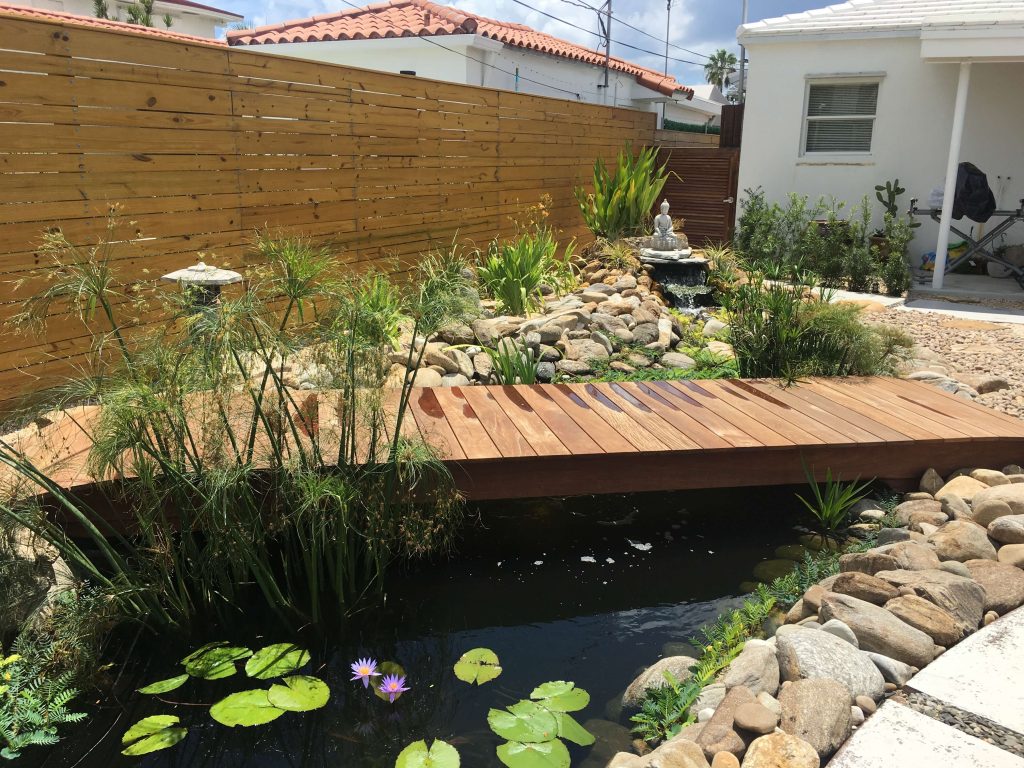
Even before you could realize it, your seemingly clean water reservoir could appear murky green. One week, you are enjoying the view. The next, you are peering through cloudy waters, wondering what exactly went wrong. The answer, to most people’s surprise, lies hidden in the pond’s natural balance, not a lack of chemicals. Whether it’s too much sunlight, excess nutrients, or struggling beneficial microbes, multiple factors can cause the cloudiness. The trick is to tackle these factors and maintain water quality in koi pond rather than chase temporary workarounds. Having said that, we have prepared a detailed guide to walk you through the ways of keeping your water reservoir clean naturally.
Identify Your Water Clarity Problem First
Before you add anything to the pond, take a close look at what’s actually happening beneath the surface. Let’s talk about the most common greenish appearance! It usually signals microscopic algae feeding on excess nutrients and thriving due to excess sunlight. Spotting them isn’t rocket science, especially the string-shaped ones, clinging to waterfalls, rocks, and plant baskets.
The brownish appearance, on the contrary, stems from decaying leaves, stirred-up segments, or organic debris washing into the pond after a heavy downpour. So, it’s evident that each problem has a different cause, which is why you cannot risk treating them in the same way. Rather, focus on identifying what’s clouding the water first. Only then can you decide the best approach for pond cleaning permanently.
Add Beneficial Bacteria to Starve Algae
You might not know this, but these microbes take up the role of your pond’s natural cleaning crew. Whether it’s the fish pellet, fallen leaf, or bits of fish waste, every leftover element add nutrients to the water. This, when coupled with excess sunlight, causes an algal bloom, a phenomenon where the green algae grows uncontrollably. Beneficial bacteria enter the stage, take on the lead role, and break down all these waste products. So, the algae won’t have enough nutrients to thrive.
Why Biological and Physical Filtration Both Matter?
Whenever it comes to pond clearing, you have to focus on two different yet significant approaches. One is what you can see and control, and another is the one happening at a microscopic level. Here’s how!
- Whether it’s the visible debris, fish waste, or suspended particles, mechanical filters that you put in place stop the circulation throughout the tank and clouding the water
- Biological filters, on the other hand, house beneficial microbes, known to break down toxic components and stop algal bloom
Combine both of these together in a bundle, and you get a cleaner water reservoir throughout the year.
Don’t Power Wash Your Rocks
Most often the rocks or the gravel lining around your pond appear as if they need a serious scrub. However, if you simply trust the site and get started with blasting them clean, you would be doing more harm than good. That’s because their surfaces host beneficial microbes that help break down waste and maintain water quality in koi pond. So, do not use a pressure washer. Otherwise, it will strip away these helpful colonies.
Use Plants to Control String Algae
String-shaped algal organisms can quickly turn your pond rocks, waterfalls, and edges into a slippery green mess. So, never reach straight for an algaecide. Rather, hand over the job to plants like:
- Water lilies
- Submerged plants
- Other suitable aquatic vegetation
These will compete with the algae for nutrients, thereby limiting the latter’s growth. Floating plants can also offer shade, which means the string-shaped organisms won’t be directly exposed to the sun. However, make sure to trim plants regularly so that you won’t end up with dead foliage.
Feeding and Stocking: Don’t Overdo Either
Truth be told, you often end up showing affection by feeding your fish a handful of extra food. However, it also leads to leftovers floating in the water, which ultimately turns into an algae problem. Uneaten pellets, for example, decompose quickly and strain your reservoir’s filtration system. So, always feed your fish what they can consume within a few minutes. The key here is to adjust the portions according to both water temperature and activity levels.
Apart from this, stocking will also matter equally, if not more. Adding too many fish in the pond’s limited space means way more waste than what the biological cleaners are capable of handling. It will automatically degrade water quality and facilitate algal growth.
Fixing Brown or Cloudy Water
The brownish appearance you see is most often due to:
- Decaying leaves
- Organic debris
- Tannins released by certain aquatic plants
On the other hand, disturbed sediment and suspended particles leave the pond’s water cloudy. So, when you plan pond cleaning, here’s what to do.
- Start by removing the fallen leaves from the water
- Then move to cleaning the debris and checking if the mechanical filters are working properly or not
- If sediments keep stirring up, you can add a layer of pond gravel to ensure the loose particles remain in place
Should You Use Algaecide? Pros, Cons, and Risks
Sometimes, even after putting in your best efforts, the stubborn algae continue to return every now and then. It’s then you can consider using an algaecide, as it will help you control the growth. However, it won’t automatically fix what caused the issue in the first place. When left unaddressed, the following factors will again trigger an algal bloom:
- Poor filtration
- Excess nutrients
- Too much sunlight
There’s also a risk. When you kill large amounts of algae, the concentration of dissolved oxygen can deplete rapidly, putting your fish’s survival at stake. The bottom-line? Use this algaecide only when it’s absolutely necessary and always follow the product’s guidelines.
How Pond Size and Season Change the Approach?
When we talk about a small reservoir, the risks of losing the ecological balance are much higher due to limited water volume. Larger ones, on the other hand, have more buffering capacity in comparison. Yet they need proper maintenance and filtration, which is why you cannot simply assume that a colossal pond will remain healthy without any effort on your end.
Season changes the equation too. Warm weather facilitates the growth and spread of algae. However, when it comes to colder air, both bacterial and fish activities decelerate. So, what you have to do is remove the winter debris and restart filtration carefully upon the onset of spring. During summer, manage both nutrients and sunlight properly. The bottom line here is to adjust the approach grounded in your pond’s conditions.
FAQ
How long does it take to clean a pond in natural ways?
Minor cloudiness usually disappear within a couple of days without you having to try any cleaning technique. But when it comes to persistent algal problems, you will have to invest a couple of weeks at the least for consistent maintenance and filtration improvements.
Are UV clarifiers worth it for pond water?
Yes, but only when suspended algae have turned your tank’s water completely green. These equipment units treat the passing water, clumping microscopic algae for the filtration system ahead.
Get a pond consultation
Still struggling with cloudy water or stubborn algae? Get expert guidance from Deck Pond Builders, one of the leading custom pond builders in the US to identify what’s causing these issues. Whether you want to build a practical maintenance routine or understand when to use an algaecide or pressure washer, reach out to our experts today!